Study Abroad Articles


Student Visa Trends 2026: How to Avoid Rejections for Europe, UK, USA, Canada and Australia
03 Jun 2026
-
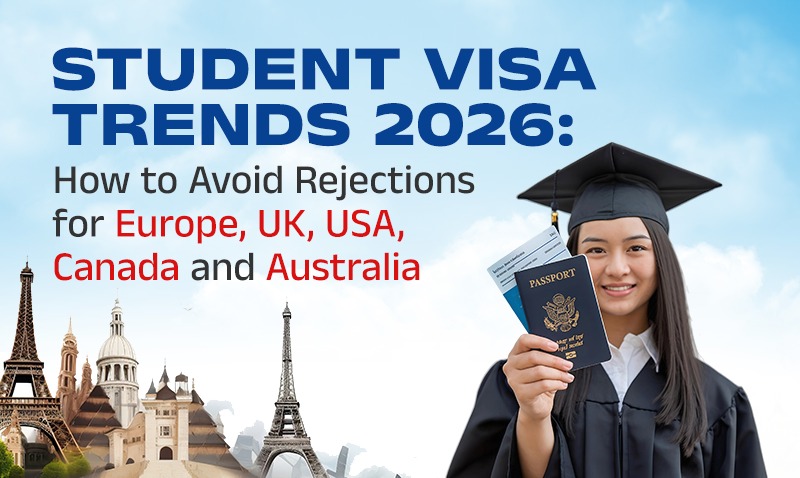
Obtaining a student visa is one of the most important steps in the international education journey. While students spend considerable time selecting universities, preparing applications, and arranging finances, visa approval ultimately determines whether their study abroad plans can move forward. In 2026, visa authorities across major study destinations are implementing stricter verification procedures, enhanced documentation reviews, and increased scrutiny of financial evidence, making proper preparation more important than ever.
Many students underestimate the complexity of visa applications and often face avoidable delays or rejections due to incomplete documentation, inconsistent information, insufficient financial evidence, or poor interview preparation. Using a reliable Study abroad app, combined with guidance from the Best consultant for Europe, can significantly improve application quality and reduce common mistakes that lead to visa complications.
Understanding Why Student Visas Get Rejected
Visa officers assess applications based on multiple factors including academic intent, financial capability, documentation accuracy, immigration compliance, and the overall credibility of the student's study plans. Even small mistakes can raise concerns during the evaluation process.
Common reasons for rejection include incomplete forms, missing documents, weak financial evidence, inconsistencies between application documents, unclear career objectives, and failure to demonstrate genuine student intent. Understanding these factors early allows students to prepare stronger applications and avoid unnecessary complications.
Country-Specific Visa Requirements Are Different
One of the biggest misconceptions among students is assuming that visa procedures are similar across countries. In reality, every destination follows different requirements and assessment criteria.
Students planning to Study in UK must demonstrate sufficient financial resources, a valid Confirmation of Acceptance for Studies (CAS), and compliance with immigration regulations. Canada places significant emphasis on financial documentation and study plans, while Australia evaluates Genuine Student requirements. The USA often requires comprehensive interview preparation and clear academic objectives.
Students interested in specialised programmes such as Medicine in Europe must often meet additional documentation and eligibility requirements depending on the destination country and institution.
Financial Documentation and Interview Preparation
Financial evidence remains one of the most important aspects of visa approval. Students must demonstrate that they can support tuition fees, living expenses, accommodation costs, and other educational expenses throughout their studies.
Visa interviews, where applicable, require students to confidently explain their academic goals, programme selection, university choice, and future career plans. Poor preparation can create uncertainty and negatively impact visa outcomes. Students who organise documents properly and prepare thoroughly often experience smoother application processes and faster decisions.
The Role of Technology and Professional Guidance
Technology is helping students manage increasingly complex visa procedures more effectively. A modern Study abroad app can assist students by tracking application deadlines, organising documentation, providing reminders, and offering access to educational resources throughout the visa process.
Professional counselling also plays a critical role in helping students understand destination-specific requirements, identify potential issues, and prepare stronger applications. Expert guidance often reduces errors, minimises delays, and improves overall visa success rates.
Student visa procedures continue to evolve as governments strengthen immigration and education policies. Students who understand country-specific requirements, maintain accurate documentation, and prepare well in advance significantly improve their chances of approval.
Through careful planning, digital support tools, and guidance from experienced professionals, students can successfully navigate visa processes for Europe, the UK, USA, Canada, and Australia while avoiding many of the common mistakes that lead to unnecessary rejections.