Study Abroad Articles


Emerging Career Paths: New Specialisations in Engineering in Europe & Medicine in Europe
23 Feb 2026
-
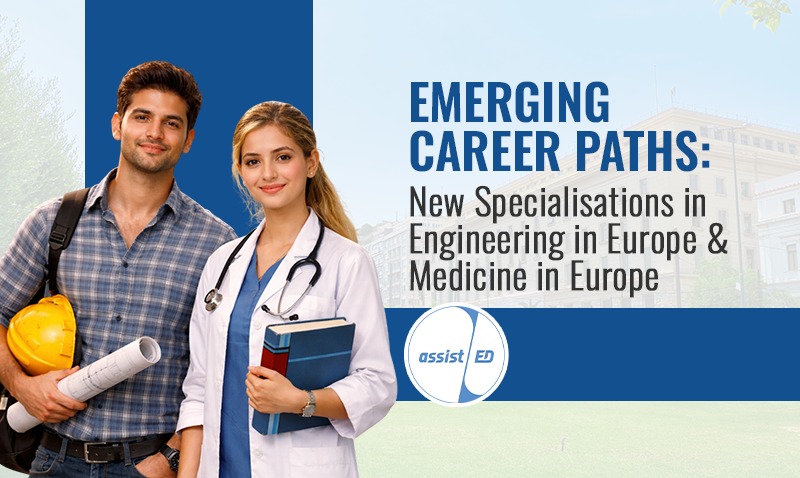
The landscape of global higher education is rapidly evolving, particularly in highly dynamic fields such as Engineering in Europe and Medicine in Europe. Today’s students are no longer choosing degrees based solely on traditional disciplines. Instead, they are increasingly drawn towards specialised, future-focused programmes that align with technological advancements, global challenges, and emerging industry demands. Europe, known for its strong research ecosystem and innovation-driven academic environment, has become a leading destination for students seeking modern, career-oriented education.
As industries transform through digitalisation, sustainability initiatives, and healthcare innovation, new academic pathways are gaining prominence. For students exploring overseas education, understanding these emerging specialisations is essential. Choosing the right niche can significantly influence employability, research opportunities, and long-term career growth.
Artificial Intelligence & Intelligent Systems (Engineering)
Artificial Intelligence (AI) has moved from being a niche subject to becoming one of the most influential technological fields globally. Across Engineering in Europe, AI-focused specialisations such as Machine Learning, Robotics, Intelligent Systems, and Data Engineering are witnessing significant growth. Industry reports consistently show AI-related roles ranking among the fastest-growing careers worldwide, with demand extending across sectors including manufacturing, finance, healthcare, logistics, and cybersecurity.
Europe has positioned itself as a major hub for AI research and regulation-driven innovation. Students pursuing AI specialisations benefit from interdisciplinary exposure, combining computer science, mathematics, automation, and real-world problem solving. These programmes prepare graduates for careers that are expected to remain highly relevant for decades.
Renewable Energy & Sustainable Engineering
Sustainability has become a defining priority for global economies. Specialisations within Renewable Energy, Environmental Engineering, Sustainable Infrastructure, and Green Technologies are becoming increasingly attractive within Engineering in Europe. With Europe leading climate initiatives and renewable energy adoption, graduates in these fields are entering expanding job markets.
Studies indicate that renewable energy sectors continue to generate millions of jobs globally, driven by investments in solar, wind, and energy-efficient technologies. Students specialising in this area gain expertise in energy systems, smart grids, and environmental impact reduction — skills critical for future industries.
Biomedical Engineering & Health Technologies
The convergence of engineering and healthcare has created one of the most exciting interdisciplinary fields — Biomedical Engineering. This specialisation, highly prominent in Engineering in Europe, focuses on medical devices, diagnostic systems, biomaterials, and healthcare technologies. As healthcare systems increasingly rely on advanced technologies, demand for biomedical innovation continues to grow.
Students benefit from applying engineering principles to medical challenges, opening career paths in medical technology development, research, rehabilitation systems, and digital healthcare solutions.
Digital Health & Medical Technology (Medicine)
Healthcare is undergoing a significant digital transformation. Within Medicine in Europe, specialisations in Digital Health, Medical Informatics, Telemedicine, and Healthcare Data Analytics are becoming increasingly relevant. The integration of technology into healthcare delivery, diagnostics, and patient management has reshaped modern medical practice.
Global healthcare technology markets continue to expand rapidly, driven by ageing populations, remote care solutions, and AI-assisted diagnostics. Students entering these specialisations gain knowledge bridging clinical expertise with technological innovation.
Precision Medicine & Personalised Healthcare
Precision Medicine represents a major shift towards personalised, data-driven healthcare solutions. This emerging area within Medicine in Europe combines genetics, biotechnology, and advanced diagnostics to develop targeted therapies. As medical research advances, personalised treatment strategies are gaining global importance.
Students specialising in this field gain exposure to genomics, advanced medical science, and patient-specific treatment methodologies — making it particularly appealing for research-driven career paths.
The future of higher education lies in specialisation, innovation, and interdisciplinary learning. Fields such as Engineering in Europe and Medicine in Europe are expanding far beyond conventional study routes. Emerging specialisations like Artificial Intelligence, Renewable Energy, Biomedical Engineering, Digital Health, and Precision Medicine are shaping the careers of tomorrow. For students and parents exploring overseas education, understanding these evolving academic pathways is essential for making informed decisions.
Navigating these choices can often feel overwhelming due to the vast number of programmes and rapidly changing industry trends. This is where modern digital tools like a study abroad app play a transformative role, helping students explore opportunities, evaluate suitability, and plan their academic journey with greater clarity and confidence.